
Blogs and Articles
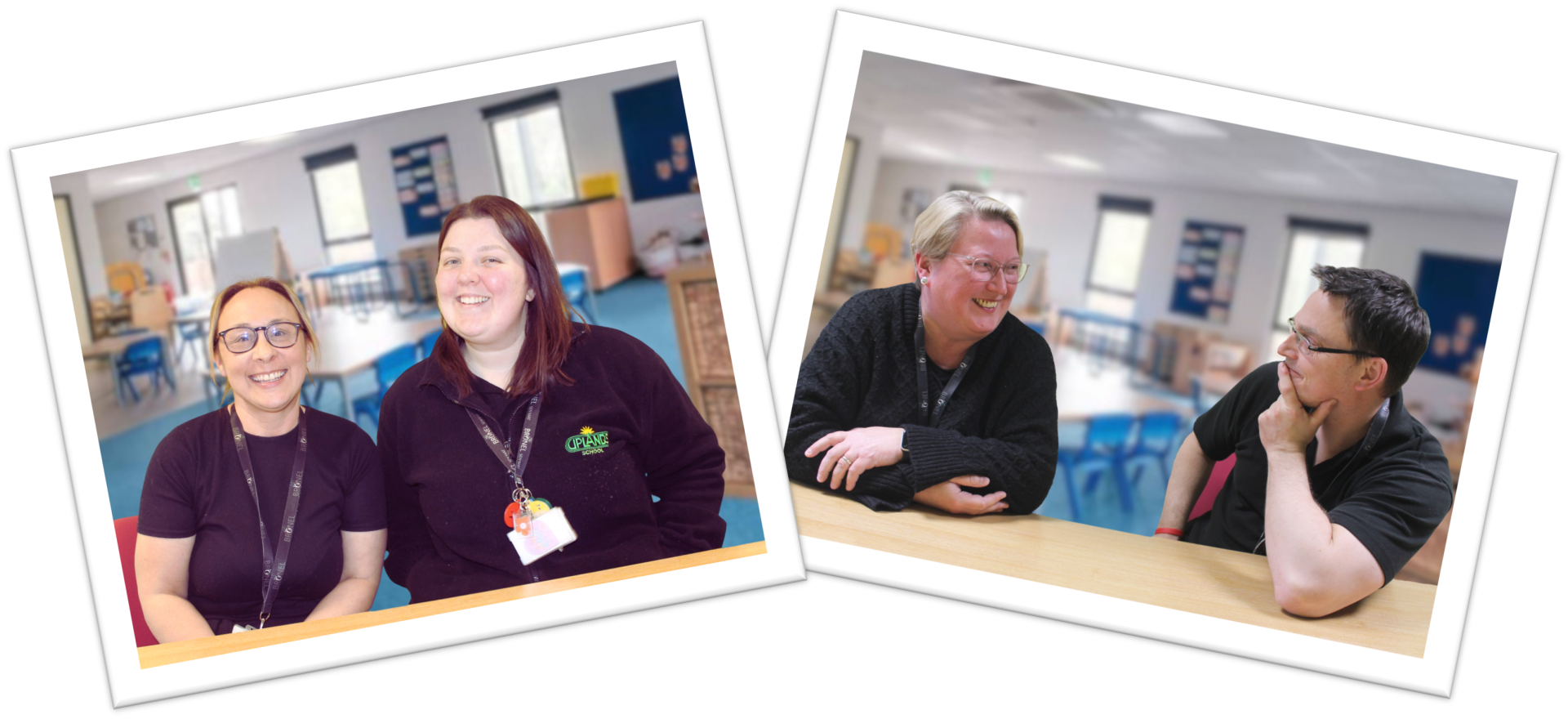
Our Head of Resourcing Services and Digital Media & Marketing Lead recently spent time talking with our teachers to understand what it’s really like to be a teacher in SEND. Here’s what they had to say…
'Why I left Mainstream for SEND'
David's Story
Why I Left Mainstream for SEND
Before moving into SEND, I had spent six years teaching in mainstream education. I genuinely enjoyed my job and felt settled in the classroom, teaching GCSE and A-level students. At that point, SEND wasn’t something I knew a great deal about, it just wasn’t an area I’d had much exposure to.
Interestingly, I didn’t really have any major concerns about moving into SEND. I think that was partly because I didn’t fully know what I was coming in to! Rather than feeling anxious, I felt excited by the idea of change and ready for something new.
If I had any assumptions at all, they were probably around behaviour. Like many people, my understanding of SEND was limited, and I quickly realised those assumptions were unfounded once I arrived. The reality of the setting and the young people was very different from what I’d imagined.
Taking the leap
What first prompted me to consider SEND teaching wasn’t dissatisfaction with mainstream, I was happy where I was. But alongside my teaching role, I began volunteering at a youth club for young people with SEND. I loved working with that cohort and really connected with them.
After six years in mainstream, I started asking myself, What am I doing next? Around that time, an advert came up for a role at Uplands. I applied without expecting much to come of it, but I’m incredibly glad I did.
One of the moments that really stayed with me from the youth club was the honesty of the young people. There was something refreshing and grounding about working with them, and that experience definitely influenced my decision to make the move.
What I’ve discovered since
One of the biggest surprises was adjusting to the level of development. I was teaching students of the same age as before, but at a very different level. Moving away from GCSEs and A-levels was a challenge, but in a good way. Over time, I learned that less really is more, and that clarity and simplicity are key.
The most positive aspect of the role, and one I didn’t fully expect, has been the relationships. I’ve always wanted to work closely with young people, but I wasn’t sure those relationships would feel the same outside mainstream. As a class teacher in SEND, you really do build strong, meaningful relationships not just with students, but with parents and carers too. It becomes a genuine partnership, all focused on achieving the best outcomes for the young person.
SEND teaching is also different in ways I didn’t anticipate. You deliver everything, and while that’s demanding, it’s also part of the appeal. All teaching is about preparing students for life, but here it feels more meaningful. Everything you do has a clear purpose.
Why I don’t regret it
What makes this role so rewarding is knowing the impact of what we do every day. The progress might look different from mainstream, but it’s no less significant.
Working in SEND has also highlighted the importance of teamwork. This isn’t a job you do alone. You work alongside a team of people, often managing a small group of staff, which is very different from mainstream where it’s usually just you and the students. That can be challenging, especially when you’re new and working with colleagues who have been in the setting for a long time, but the sense of shared purpose is incredibly strong.
To any mainstream teacher considering SEND, I’d absolutely recommend it. It’s fulfilling, rewarding, and while it’s not easier, the rewards are significant. The bonds you build with both staff and students, and the sense of teamwork, make a huge difference.
You don’t need to know everything about every disability. What matters is seeing the individual in front of you, not a label. I don’t see disabilities, I see the young person, and that perspective has completely changed the way I view teaching.
Hayley's Story
Why I Left Mainstream for SEND
Before moving into SEND, I came from a leadership role in mainstream education, with my background firmly rooted in EYFS. Early years teaching taught me that everything starts with relationships, play, communication, and truly understanding the whole child. Those principles shaped the way I approached teaching and leadership from the very beginning.
Despite that foundation, my biggest hesitation about moving into SEND was not having the specialist knowledge or expertise. I didn’t come from a SEND background, and I worried that I wouldn’t know enough or have the depth of experience needed to do the role well.
Taking the leap
What ultimately prompted me to consider SEND teaching was a belief I’d developed throughout my EYFS career: development is not linear. In early years, you see that every day children progress in different ways, at different times, and in different directions.
Making the move felt like a leap, but it was one I didn’t take alone. Having a buddy and a mentor in place in my school made a huge difference. That support ensured I settled well into my new role and gave me the confidence to ask questions, reflect, and keep learning without fear of getting things wrong.
What I’ve discovered since
One of the biggest surprises was how transferable my skills were. It quickly became clear that the values, experiences, and approaches I’d developed in EYFS applied naturally to SEND.
Another unexpected positive was the shift in focus. As a leader in mainstream, I was often driving results. In SEND, I drive impact. The work feels more purposeful and more closely connected to the day-to-day experiences of pupils.
Why I don’t regret the decision
What I find most rewarding about my role now is how consistently it reminds me why I came into teaching in the first place. The work is challenging, but every day there is something that reinforces the impact we’re having on pupils’ lives. Choosing SEND has reconnected me with my purpose, and it’s a decision I don’t regret.
Kelly's Story
Why I Left Mainstream for SEND
Before moving into SEND, I spent six years teaching in mainstream education. I loved the classroom, but I was always drawn to inclusion, making sure every child felt part of the learning, whatever their starting point.
I did have some experience of SEND. At my previous school there was a snug for pupils with PMLD, so SEND wasn’t completely unfamiliar. Still, I worried that I didn’t have the same depth of knowledge as others who had worked in SEND for years. That was probably my biggest hesitation, would I know enough?
Interestingly, I didn’t have many assumptions about SEND or about this school. I already knew several teachers here and could see how much they enjoyed their work. That gave me confidence, but I also knew I needed to approach the move with an open mind.
Taking the leap
What really prompted me to consider SEND teaching was my passion for inclusion. In my last role, I loved adapting learning so everyone could access it and I wanted to learn how to do that even better. A manager from the snug I worked alongside encouraged me, saying they thought I’d be well suited to SEND. When the role at Brimble came up, it felt like the right moment. Knowing there was a strong support network in place made the decision much easier.
What I’ve discovered since
One of the biggest surprises has been how much I’ve adapted and how naturally it’s happened. SEND teaching allows you to change and respond to children in the moment, and I’ve grown so much because of that flexibility.
The work–life balance has also been a huge positive. In mainstream, marking could mean up to 160 books a day, often spilling late into the evening. Here, planning is done collaboratively and feels far more effective. There’s still planning, of course but the pressure is completely different.
What I didn’t expect was just how important teamwork would be. Other people’s ideas really matter here. Working together is central, and the impact our relationships have on students is enormous.
Why I don’t regret it
What I find most rewarding is celebrating achievements even the small ones. In mainstream, progress can sometimes feel routine. Here, every achievement feels huge. I feel genuinely proud of the children.
I also have far more autonomy and creativity. Teaching isn’t about sticking rigidly to rules; it’s about meeting individual needs. Behaviour is always communication, and understanding that gives you a much bigger picture of the child.
To any mainstream teacher considering SEND, I’d say this...It’s incredibly rewarding. It’s flexible, creative, and genuinely fun. Even on challenging days, I still enjoy coming in. There’s a massive misconception that SEND is “all about behaviour” there is so much more to these children. Every day is different, and every day matters.
Becky's Story
Why I Left Mainstream for SEND
Before joining SEND, I spent ten years in mainstream education as an English teacher and Assistant Head. Teaching was always where I knew I’d end up, education has been a constant thread throughout my life.
My biggest concern about moving into SEND was the curriculum. I’d only ever taught English, so I worried: Would I know enough? Would I be able to adapt?
Despite that, I only applied to this school. I had a strong feeling that I’d have a great experience here and that instinct turned out to be right.
Taking the leap
SEND had always been in the back of my mind. During my PGCE, I attended a SEND session led by Jackie Fieldwick, and I never forgot her passion for the children. That moment stayed with me.
I’d also worked with nurture groups for GCSE students and was influenced by colleagues like Jackie and Chris who had already made the leap into SEND. I liked the idea of different ways of learning not just one fixed pathway.
When I contacted the school, I was invited in for a tour. The conversation was honest and open. I was given a coach and a buddy, and that reassurance made all the difference. It felt like a safe space to try something new and say, “Let’s have a go.”
What I’ve discovered since
What surprised me most was how much I had to offer. I genuinely surprised myself with how I stepped up into the role.
The work–life balance has been a huge positive. In mainstream, I had constant mock exams, parent evenings, and hundreds of students passing through my classroom. Now, days are busy but the pressure doesn’t follow me home in the same way. Parent contact happens daily, so formal parents’ evenings only happen twice a year.
SEND teaching is also deeply collaborative. There’s no teaching without TAs, relationships and consistency are vital. You work as a team, agreeing approaches and supporting each other. While students aren’t working towards GCSEs, they’re happy, settled, and building meaningful relationships and that really matters.
Why I don’t regret it
What I find most rewarding is seeing how small steps become big achievements. Making a child happy, confident, or comfortable in learning is a success. Every pupil has a bespoke programme, some might be doing sensory work, others using technology and that flexibility is something you just don’t get in GCSE teaching.
If something isn’t working, there’s room to ask, adapt, and try a different approach. Everything we do is building towards something meaningful.
To any mainstream teacher thinking about SEND, my advice is simple come and visit the school, you can’t fully explain SEND, you need to see it, feel it, and meet the students. There are real opportunities to progress (I am currently completing the NPQ SENCO), and it feels good to get something back while making such a difference.
'A Day in the life of an SEND teacher'
Chris's Story
Stepping Into SEND
If a mainstream teacher shadowed me for a day, I think the biggest surprise would be how much the students want to be here. Our students are genuinely happy to arrive and pleased to see you. Also, that SEND isn’t about chasing outcomes it’s about the student, not the end result.
A SEND classroom is never just one teacher and a group of pupils. You work with a team of adults every day, and one of the biggest challenges especially when you’re new is managing that team. You’re balancing different personalities, experiences and approaches.
The learning environment also looks very different. In mainstream, busy displays are often encouraged. Here, too much visual information can be overwhelming. We have to think carefully about what students will see, feel, and process. Overstimulation can completely distract from learning, so every decision about the environment really matters.
One of the freedoms I value most is curriculum flexibility. As long as I’m working within the theme, I can deliver learning in the way I know is best for my students. Many of my students are capable readers and writers, but they need learning presented differently. That level of adaptation simply wouldn’t be possible in mainstream.
A Real Snapshot of the Day
A large part of my day is spent communicating with our families. I talk to parents regularly about what their child has achieved and provide practical support such as helping families with paperwork for disability allowances or transport for example. Because we’re with the students all day, our role goes far beyond education. Supporting the care and wellbeing of the child and their family is part of the job.
Some moments stay with you forever. Recently, one of my students struggled to access any form of transport. Through patience, creativity, and a song I wrote to support her, she’s now able to get into the family car. Her parents play the song when travelling, which has completely changed what their family can do together. It wasn’t just my work the family put in huge effort too but being part of that progress was incredible.
What a ‘Good Day’ Looks Like
A good day is when I’ve made my students smile. Learning progress can be tiny, but if something I’ve said or done helps a child feel calm, safe, or happy, that really matters.
It’s also about emotional regulation of the students. Being patient, giving a child space, and trusting that they’ll return to class can lead to touching moments such as apologies, hugs, and repaired relationships. SEND teaching demands flexibility because plans can change in an instant.
Preparation is huge. I often arrive early to set-up and plan because the day itself is full-on. Assessment happens constantly, through observation and teamwork, not tests. Staff look to you for emotional leadership, if you stay calm and positive, that energy filters through the room.
Why This Work Matters
I’ve worked in jobs where you watch the clock. Here, the day flies by because what you do genuinely matters..
SEND is also personal for me as my son has SEN. I feel a responsibility to give my students a day I’d be happy for my own child to receive. Unlike mainstream, where data often dominates, SEND is about compassion, experience, and real impact.
It’s challenging work but it’s meaningful in a way few jobs are.
Katy's Story
Stepping Into SEND
If a mainstream teacher shadowed me for a day, they’d probably be most surprised by how much medical and care work happens alongside teaching. SEND is where education and care truly collide, far more than in mainstream.
Another big difference is the size of the team you work with. When you move into SEND, you have to adjust to working with and managing teams of adults. Supporting, developing, and organising staff is a job in itself, and it’s one of the biggest shifts from mainstream teaching.
Our classrooms are carefully designed enabling environments. Some pupils are early learners, working at a nursery level. Others are learning phonics or accessing sensory-based learning. The environment changes constantly to reflect the cohort and their needs. SEND classrooms don’t feel clinical they look like real schools but every detail has a purpose.
One of the freedoms SEND offers is how topics are adapted. We might all be studying the same theme, but it’s delivered in completely different ways depending on age, ability, and sensory needs. We learn about the same topics covered in mainstream but we adapt every lesson so it is at the right level for each pupil.
A Real Snapshot of the Day
The day starts with preparation, staff deployment, environment checks, and ensuring everything is safe and ready come first. With large teams, planning who is where including lunches and cover is essential to making the day run smoothly.
Communication is constant. Emails from parents, therapists, and professionals come in before pupils arrive so I try and read these to see how I can support any requests. Because many students travel by transport, digital communication is how we stay connected with our families.
Not everything looks like a traditional lesson. Some days are about embedding a skill you’ve been teaching for weeks such as standing independently or communicating in a new way. When those moments finally click, they’re huge.
What a ‘Good Day’ Looks Like
A good day is when preparation pays off. When there are no emergencies, pupils are engaged and there is a sense of fun and enjoyment in the classroom.
SEND teaching requires flexibility. Even the best-laid plans can change, but if you manage to deliver what you intended and pupils enjoy it, that’s a win. Preparation doesn’t stop at the end of the day, planning for tomorrow is essential.
Paperwork in SEND is different from mainstream and takes time, but it’s part of building a full picture of each pupil. Over time, you develop skills you never expected to have.
Why This Work Matters
What keeps me motivated is knowing we provide experiences families and mainstream settings often can’t. SEND schools open doors to learning, independence, and life experiences pupils might not otherwise access.
SEND teaching is hard, it is unlike any other teaching role. But the rewards are just as big. It’s another level entirely, and I’m proud to say I’m a SEND teacher.
If you’re interested in SEND, it’s a move that’s well worth making.